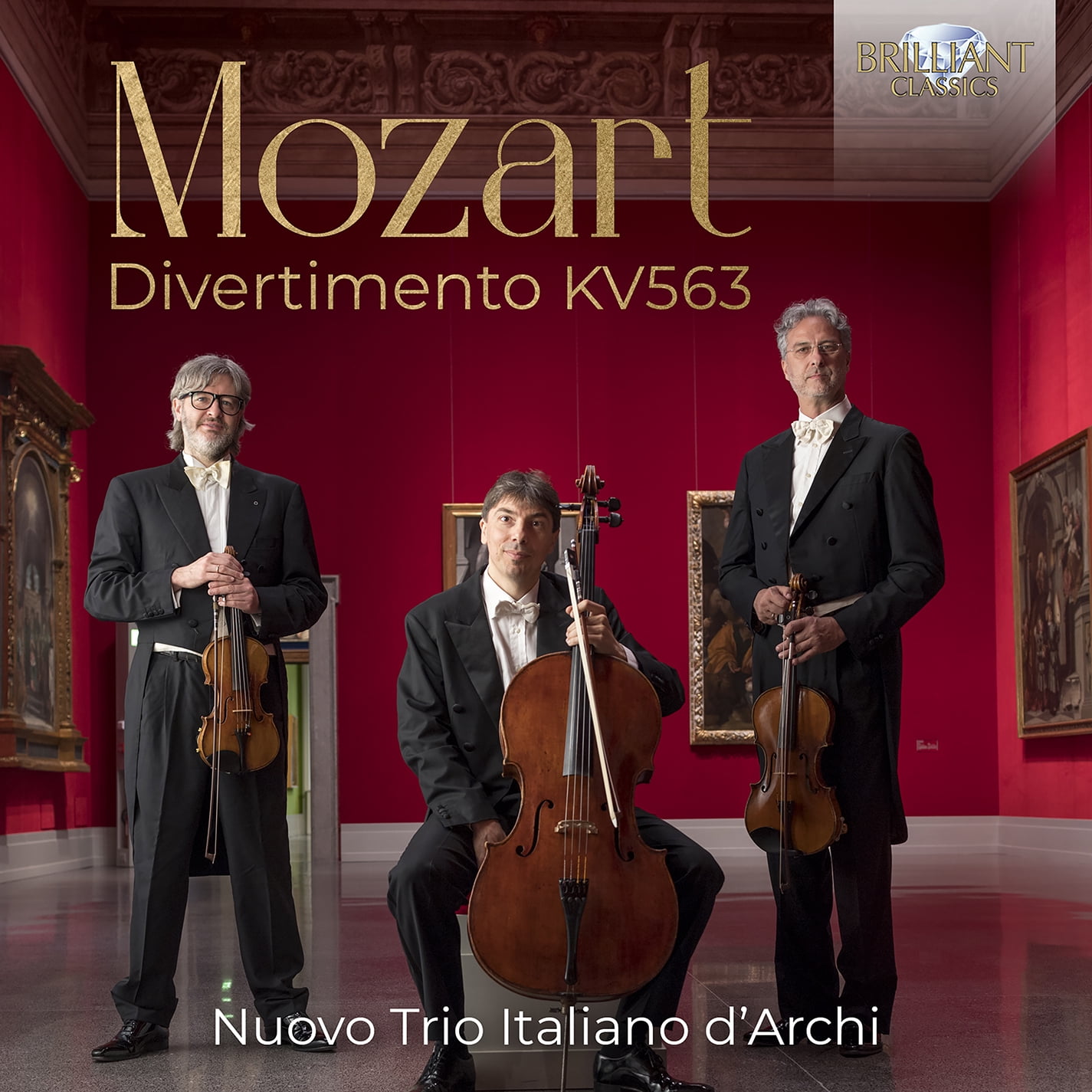
Nuovo Trio Italiano D'archi - Divertimento, KV563 - Music & Performance - CD
Product details
| Management number | 254396265 | Release Date | 2026/11/07 | List Price | US$5.26 | Model Number | 254396265 | ||
|---|---|---|---|---|---|---|---|---|---|
| Category | |||||||||
?Franz Schubert (1792-1828) only ever completed one string trio, his Trio in B flat D581 (1817). The writing is clearly inspired by the works of Mozart, not from a great trio like the Divertimento KV563, but from easier and made-for-piano genres like the violin sonatas. The cello, in fact, still remains in the orbit of the basso continuo, while the viola accompanies the main theme with formulas similar to the Alberti bass. Schubert's spark, however, is present in this minor work, for example in his way of dilating time at the beginning of the development with a phrasing that stretches, with simplicity, to infinity. The writing reveals a glimmer of the orchestral sound of the great chamber works of the last period, but nevertheless it remains linked to the elegant style of the late 18th century. Wolfgang Amadeus Mozart's (1756-1791) Divertimento in E flat KV564 (1788) was written for Michael Puchberg, a music lover who often financially supported Mozart in the last years of his life. The work bears the clear imprint of Masonic symbology, based around the number 3. The Divertimento presents several enigmatic aspects, firstly the choice of title. 'Divertimento', like cassation or serenade, was a genre of music entertainment, without intellectual ambitions or strong emotions. In Divertimento KV563, the three musicians must be high-level virtuosos to play their parts, which explore the full register of each instrument in a dialogue intertwined with contributions at the same level from the three participants. The only link with the traditional genre is the high number of movements (six), including two minuets. In this piece, Mozart's writing shows an extraordinary richness with respect to thematic invention, with an overabundance of ideas that feed a dense polyphonic dialogue. Mozart was experimenting with a fusion between the forms of instrumental music and the dramaturgy of his plays, with revolutionary results in both fields. The dynamism of the theatre, for example, is an essential element of the fluid liveliness of this Divertimento's sonata. The slow movement represents another point of contact with the work, and this Adagio, the expressive heart of the work, is structured like a great solo aria. Mozart chose the key of A flat major, rare in his music and always ambassador of special moments, to express the melancholy of this world. In certain moments, the intensity of the singing becomes so dramatic as to go beyond the boundaries of tonal language. Furthermore, the Masonic number has an almost obsessive importance in the writing, with counterpoints in three parts and variations in triplets. The spirit of Masonic Enlightenment is concentrated in the austere sonority of the minor variation, manifesting compassion and the detachment of true wisdom. The form of both the rondo and the sonata blend into an architecture of perfect proportions, developed in a movement full of grace and energy. There are two thematic elements - a lively Italian dance and a contrasting episode of vague militaristic tone. This material feeds an always alive and changing form, enriched by new harmonic ideas and ingenious transitions. Wolfgang Amadeus Mozart (1756-1791) wrote his Divertimento in E? major, KV563, a string trio, in 1788, the year in which he completed his last three symphonies. It is dedicated to Michael Puchberg, a fellow Freemason, who lent money to Mozart. The premiere was in Dresden on April 13, 1789, with Mozart playing the viola part. The great musicologist Alfred Einstein said of this extraordinary work: "it is a true chamber-music work, and grew to such large proportions only because it was intended to offer something special in the way of art, invention, and good spirits.... Each instrument is primus inter pares, every note is significant, every note is a contribution to spiritual and sensuous fulfillment in sound." Einstein called it "one of his noblest works." The work sets the highest instrumental standards and requires three equally virtuoso players. The Mozart Divertimento is paired on this CD with the String Trio in B flat by Franz Schubert. Played with great dedication and refinement by the Nuovo Trio Italiano d'Archi (Alessandro Milani violin · Luca Ranieri viola · Pierpaolo Toso cello).
- DIVERTIMENTO KV563
- Music & Performance
- Brilliant Classics
| Performer | Nuovo Trio Italiano d'Archi |
|---|---|
| Music genre | Classical |
| Media format | CD |
| Original release date | 2023 |
| Language | English |
| Has parental advisory label | N |
| Number of discs | 1 |
| Track listing | Coming Soon! |
| Record label | Brilliant Classics |
| Composer | Wolfgang Amadeus Mozart |
| Songwriter | Mozart / Toso / Milani |
| Track name | String Trio in B-Flat Major, D.471: I. Allegro, Divertimento in E-Flat Major, KV563: I. Allegro, KV563: II. Adagio, KV563: III. Menuetto. Allegretto - Trio, KV563: IV. Andante, KV563: V. Menuetto. Allegretto - Trio I - Trio II |
| Digital audio file format | CD |
| Music media format | CD |
Bestseller ranking
Table Saw Blades





Customers who viewed this product also viewed
Classical Composers
Correction of product information
If you notice any omissions or errors in the product information on this page, please use the correction request form below.
Correction Request Form